
How to Handle a Tree Falling on Your Fence and Check Insurance
A neighbor’s tree can fall on your fence without automatically making the neighbor responsible. Homeowners insurance may cover the damage if the fall resulted from a peril covered by your policy. If you’re deciding what to do if a tree falls on your fence, stay clear of hazards, document the damage, and contact your insurer before arranging removal unless immediate action is needed for safety.
It’s understandable to wonder whether the tree’s owner, your insurer, or you should take the first step. In many storm-related cases, responsibility depends on whether the tree was healthy or showed signs of a problem. Coverage depends on your policy and what caused the tree to fall.
This guide explains how to respond safely, preserve useful evidence, and report the damage. You’ll also learn when insurance may help with fence repairs or tree removal, how to assess responsibility when a neighbor’s tree falls, and when a damaged fence may need repair or replacement.
Table of Contents
Does homeowners insurance cover damage from a fallen tree?
Homeowners insurance may cover fence or detached-structure damage when a fallen tree results from a covered peril. Your policy and the cause of the fall determine how a claim is handled.
Document Damage and File a ClaimOnce the area is safe, photograph and record video of the fence, tree, surrounding damage, and where the tree came from. Share the evidence with your insurer when reporting the claim. Keep the claim number, communications, estimates, and receipts together. Avoid permanent repairs until the insurer documents the damage or authorizes the work. When deciding what to do if a tree falls on your fence, preserve evidence before cleanup.
Check Fence and Detached-Structure CoverageReview your homeowners policy for coverage of fences and structures separate from your home. Damage may be covered when the tree fell because of an insured peril, but coverage depends on the policy. Ask how it treats fence repairs, cleanup, and tree removal. Removal may be covered when the tree damaged an insured structure; a tree lying in the yard without causing such damage is generally treated differently.
Review Coverage for Structural DamageCheck whether the fallen tree also damaged your home, garage, or another covered structure. Homeowners insurance may cover structural damage caused by a covered peril, including wind, depending on your policy. A healthy tree falling during a storm may be treated differently from a dead or diseased tree if poor maintenance contributed to the fall. Report home damage promptly, document it when safe, and keep insurer communications and repair estimates.
Address Shared or Boundary Fence DamageFor a shared or boundary fence, photograph the damaged sections and the tree’s location, then notify your neighbor in writing. Ask your insurer how your policy handles the fence and provide the neighbor’s details. The tree’s location alone doesn’t automatically make the neighbor responsible. If you’re deciding what to do if a tree falls on your fence, remember that when a healthy tree falls in a storm, contacting your own insurer is generally the first step.
Should you call your insurance company or a tree-removal service first?
If there’s no immediate danger, contact your insurance company before arranging removal. First establish who handles the tree, what your policy may cover, and whether local requirements apply.
Determine Who Is Responsible for Tree RemovalCheck whether the fallen tree damaged a covered structure or blocked necessary access. If it’s only lying in the yard without damaging a structure or blocking access, the property owner is typically responsible for removal. A blocked driveway may qualify for limited insurance benefits, depending on the policy. If the tree came from a neighbor’s property, its origin alone doesn’t automatically make the neighbor responsible. Don’t assume the neighbor’s insurer will arrange or pay for removal.
Hire Tree-Removal and Repair ProfessionalsAfter reporting the damage, arrange qualified help to remove the tree and repair the fence. Engaging experienced specialists like Prime Tree Services is essential because a tree resting on a fence can shift during cutting, leaving posts or panels unstable. Keep people clear of the work area, and don’t try to cut or move heavy limbs yourself. Ask your insurer about documentation or authorization before permanent repairs begin, then keep estimates and receipts with your claim records.
Check local requirements before scheduling non-emergency tree removal or rebuilding a fence. Rules and permit requirements can vary by location and project, so contact your local building or permitting office. Don’t assume the tree’s fall removes requirements that apply to the work.
Separate urgent hazards from routine cleanup. If a tree is entangled with power lines, stay away and call the utility company. For other unstable branches or a tree pressing against a structure, keep clear and describe the hazard when arranging professional help. If there’s no immediate danger, give the insurer time to document the damage before approving removal. This approach preserves claim evidence while helping move the damaged fence toward safe repair.
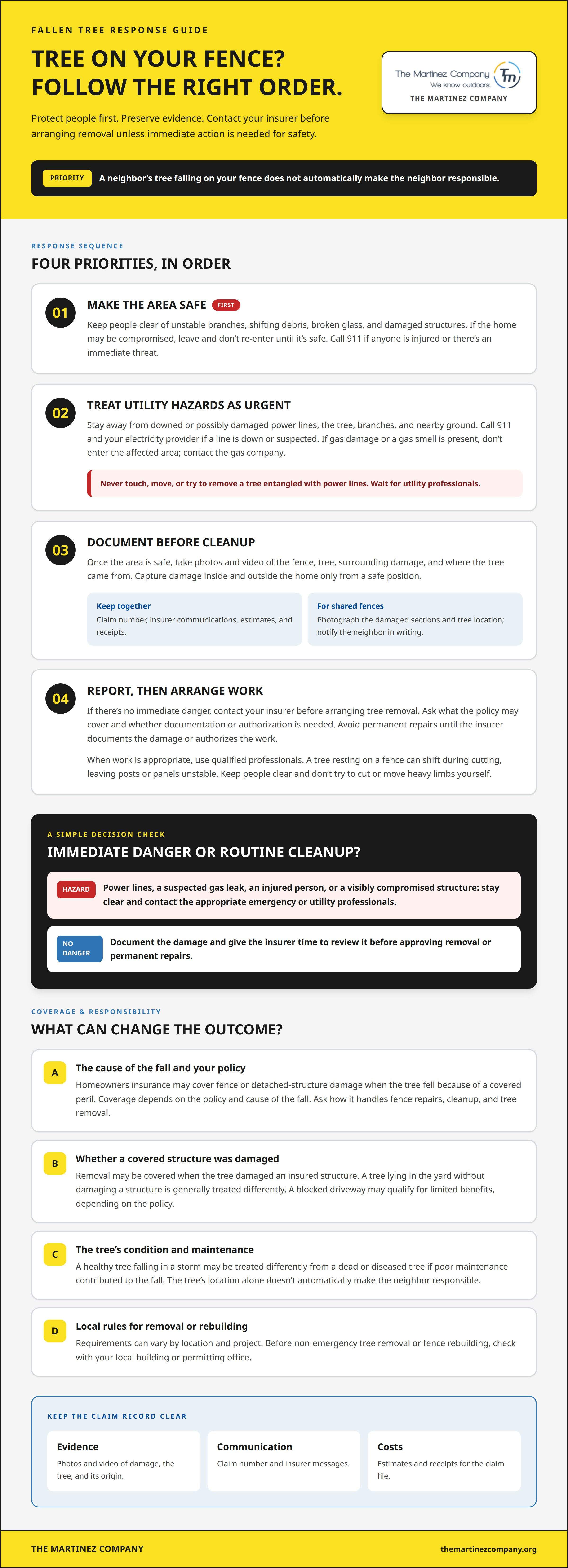
What Should You Do If a Tree Falls on Your House or Property?
Protect people first, then report hazards and assess the damage from a safe location. A fallen tree can leave unstable branches, damaged utilities, or a compromised structure.
Take Immediate Safety StepsMove away from the impact area if the tree struck your home or caused visible structural damage. Leave the building if the roof or major supports appear compromised, and stay elsewhere if utilities are damaged. Keep clear of broken glass, shifting debris, and unstable branches. Call 911 if anyone is injured or there’s an immediate threat. Don’t re-enter a damaged home until it’s safe.
Stay Clear of Power-Line HazardsTreat every downed or possibly damaged power line as dangerous. Keep away from the tree, branches, and nearby ground, and call 911 and your electricity provider if a line is down or suspected. If the tree is entangled with power lines, contact the utility company and wait for professionals. Don’t touch the tree, move branches, or attempt removal near electrical equipment.
Check for gas-line damage only from a safe position. If you see damage or smell gas, don’t enter the affected area. Shut off gas at the meter only if it’s safe to reach; otherwise, call the gas company. Don’t operate equipment near a suspected leak. Clearly report the hazard so responders and utility professionals understand the risk.
After the area is safe, document damage inside and outside your home with photos and video. Capture the roof, walls, and visible structural supports without approaching unstable areas. Notify your insurer promptly; insurance may cover cleanup or removal after a tree damages a home. Once approved, hiring an experienced crew like Statement Tree Care ensures the fallen tree is carefully dismantled and removed without causing additional damage. Have a professional assess the structure before treating the building as safe or planning repairs.
Responsibility when a healthy tree falls in a storm
A healthy neighbor’s tree falling during a storm doesn’t automatically make the neighbor responsible. Focus on the tree’s condition, any evidence of prior danger, and the damage to your property.
Consider whether the tree appeared healthy before the storm. Under most state laws, the tree owner usually isn’t responsible when a healthy tree falls because of a storm or another act of nature. Your homeowners insurance may cover fence damage if the storm was a covered peril under your policy. Report the damage to your insurer and ask how your policy applies.
Look for evidence that the tree was hazardous before it fell. Dead limbs, visible decay, cracks, or a strong lean can indicate a problem, especially if the neighbor knew about those signs. A neighbor’s ownership alone doesn’t establish negligence. The key questions are whether there were visible warning signs and whether the owner knew or should have known the tree posed a danger.
Preserve records showing what happened before and after the storm. Save dated photos of the fallen tree, fence damage, and any visible decay. Keep relevant messages or written notices you previously sent the neighbor about the tree. These details may help establish whether the tree was hazardous and whether the owner had notice. Don’t treat the tree’s location as proof of responsibility.
Share the evidence with your insurer and communicate with the neighbor in writing. A neighbor may be responsible if negligence contributed to the fall, but responsibility depends on what can be shown about the tree’s condition and prior notice. A neighbor may dispute a claim, and a lawsuit can depend on the available evidence. Keep the conversation factual, retain copies, and follow your insurer’s claim process.
The Martinez Company: Fence Installation
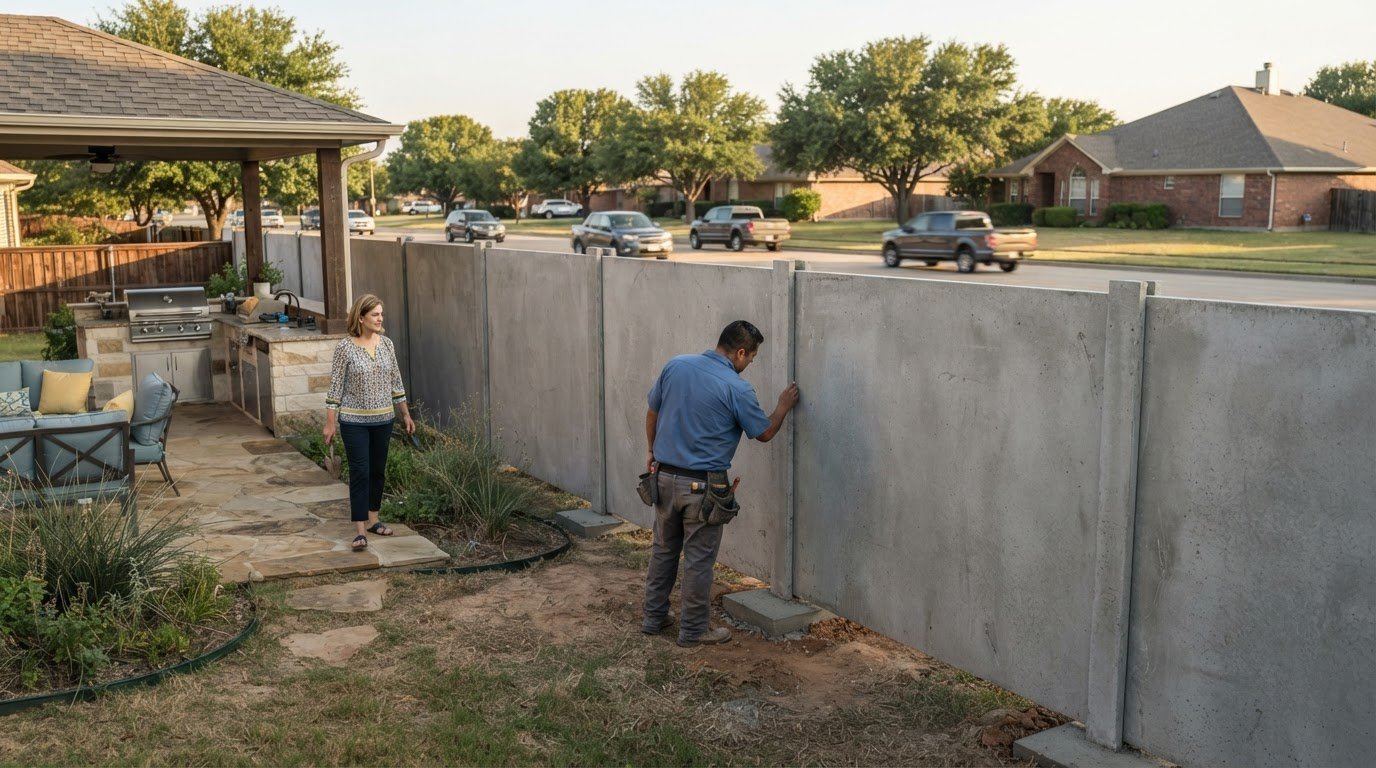
The Martinez Company installs fences when a fallen tree leaves a fence beyond repair or replacement is the practical next step. After the hazard is removed and your insurer has documented the damage, consider how a new fence can restore the boundary and fit your property.
A few damaged panels may not require replacing the entire fence, while extensive damage may call for a new installation. The Martinez Company installs fences for residential and commercial projects, helping transform a damaged boundary into a complete, purposeful structure.
If you’re planning a replacement fence, contact The Martinez Company to discuss your project.
Plan the next stage with confidence
Once the immediate damage is addressed, use the rebuild to shape a boundary that suits your property and how you use it. After deciding what to do if a tree falls on your fence, move from urgent cleanup toward a clear plan for the finished space. Consider whether the replacement should restore the original boundary or support a broader update to your home or outdoor area.
The Martinez Company offers fence installation alongside residential and commercial contracting and outdoor living spaces. This range of services can connect a fence project with the property’s broader structure and function, rather than treating the boundary as an isolated detail.
When you’re ready to discuss the project, contact The Martinez Company. Take the next step toward a well-built boundary and a more complete property.
Frequently Asked Questions
Are dead or diseased trees covered by homeowners insurance?
Damage from a dead or diseased tree may not be covered if poor maintenance or negligence contributed to its fall. The insurer may consider the cause, the tree’s condition, and whether warning signs were ignored. For example, visible decay documented before a storm may be treated differently from a healthy tree uprooted by severe weather. Review your policy and report the damage with clear evidence.
Can you remove a fallen tree before the insurance adjuster arrives?
If there’s no immediate danger, contact your insurer before arranging removal so the damage can be documented. Take photos and video first, including the tree’s position and affected property. If a hazard makes urgent action necessary, put safety first and keep records of the damage and removal work. Save receipts and communications to support your claim, and avoid permanent fence repairs until the insurer documents or authorizes them.
What If a Tree Damages Your Fence, Shed, or Detached Garage?
Report the damage to your insurer and ask how your policy covers the affected structure. A fence, shed, or detached garage may be covered when a tree fell because of an insured peril, but coverage depends on the policy and cause. Photograph each damaged area separately. If a garage or shed contains damaged belongings, document those items too, since the structure and its contents may be treated differently.
What if a neighbor’s tree fell on your property?
A neighbor isn’t automatically responsible just because the tree grew on their property. If a healthy tree fell during a storm, you’ll generally need to contact your own insurer about damage to your property. Responsibility may differ if the neighbor knew, or should have known, that a dead or visibly dangerous tree could fall. Keep any earlier written notices or messages showing that the tree’s condition was raised.
What should you do immediately after a tree falls on a fence?
Keep people away from the fallen tree and damaged fence, since branches or posts may shift. Look for downed or entangled power lines without approaching them; contact emergency services and the utility if lines are down or suspected. Once the area is safe, photograph the fence, tree, and damage from several angles. Then report the incident to your insurer before arranging non-urgent removal or permanent repairs.
How can you tell if a fallen tree or damaged fence is an emergency?
Treat the situation as an emergency if someone is injured, power lines are down or suspected, or the tree has struck a home and caused visible structural damage. Call 911 for an injury or immediate threat. Leave a home if its roof or major supports appear severely damaged, and stay clear of unstable branches. A damaged fence without these hazards still needs attention, but keep people away from it.
Comments