
How to Choose Outdoor Kitchen Cabinets That Last
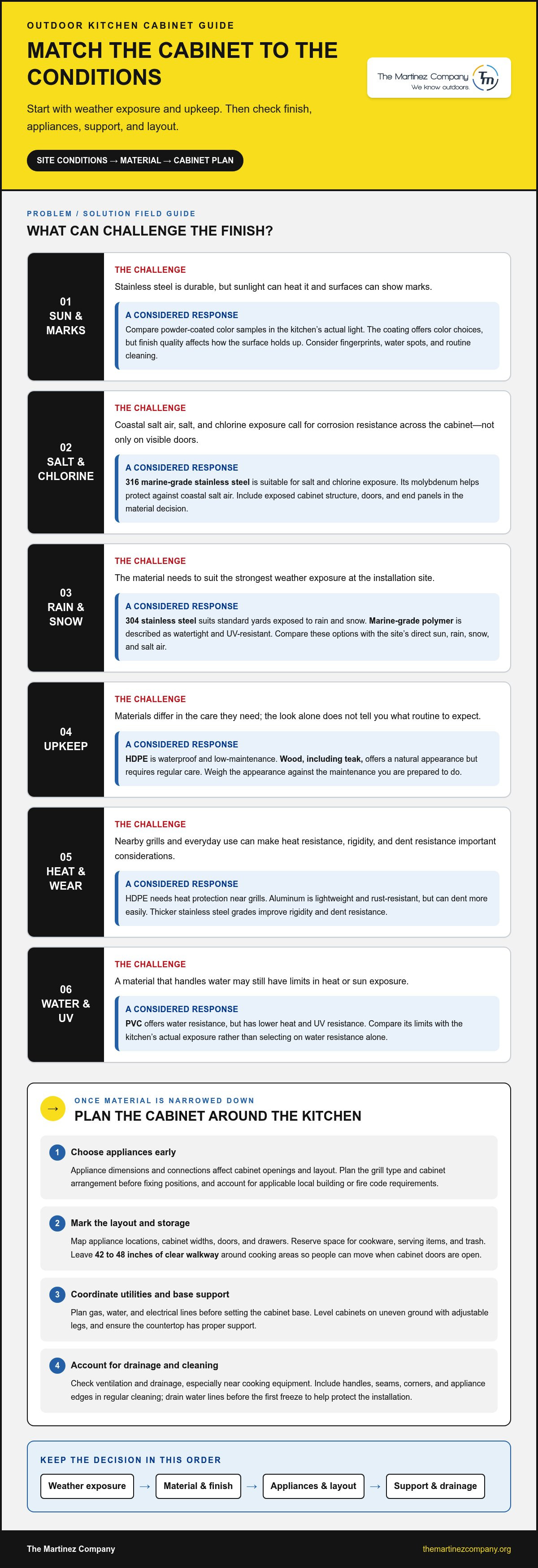
Color doesn’t rule out stainless steel. Powder-coated stainless steel cabinets offer color options, but finish quality matters; when deciding how to choose outdoor kitchen cabinets, consider the finish alongside the cabinet’s exposure to sun, moisture, and salt air. For coastal kitchens, 316 marine-grade stainless steel suits salt and chlorine exposure, and its molybdenum helps protect against coastal salt air.
That gives you room to shape the look without making color the only consideration. The right cabinet choice also depends on weather exposure, how much upkeep you’re prepared to handle, and what the countertop and appliances require from the structure.
Start with materials and site conditions, then compare colors and finishes. Choose appliances early, since their dimensions and connections affect the cabinet layout. Account for openings, support, and drainage, too. These steps help turn an initial design idea into cabinetry suited to its setting.
Table of Contents
Q: Can outdoor stainless steel cabinets be customized with colors?
Yes. Powder-coated stainless steel cabinets come in different colors, but the finish quality matters for long-term appearance. Consider the coating alongside weather exposure, maintenance, and appliance requirements before choosing a color.
Choose a finish suited to the setting. Stainless steel is strong and durable, but sunlight can heat it and surfaces can show marks. Compare color samples in the kitchen’s actual light, then consider fingerprints, water spots, and routine cleaning. A powder-coated finish gives you color choices, while the quality of the coating affects how the finished surface holds up.
Plan for corrosion resistance and routine care. Salt, moisture, and food residue can affect exposed surfaces. Build regular cleaning into your maintenance plan, especially around handles, seams, and appliance edges. For coastal locations, 316 marine-grade stainless steel is suitable for salt and chlorine exposure. Its molybdenum helps protect cabinets from coastal salt air.
Include teak’s upkeep in the decision. Teak offers a warm, natural appearance, but wood outdoor cabinets require regular maintenance. Add that work to your maintenance calendar before choosing wood. Compare the look of teak with powder-coated stainless steel and decide which care routine fits your plans.
Account for applicable building and fire codes. Outdoor kitchens may need to meet local building or fire code requirements, depending on the installation and location. Include the grill type and cabinet arrangement in your code planning before fixing cabinet positions.
Measure the layout and storage before ordering cabinets. Mark appliance locations, cabinet widths, doors, and drawers on a plan. Reserve space for cookware, serving items, and trash. Leave 42 to 48 inches of clear walkway around cooking areas so people can move through the kitchen when cabinet doors are open.
Install utilities, then level and secure the cabinet base. Plan gas, water, and electrical lines before setting the base. Use adjustable legs to level cabinets on uneven ground, including flagstone, and ensure the countertop has proper support. Drain water lines before the first freeze to help protect the installation.
Cabinet materials and weather durability
Compare materials with the kitchen’s climate, exposure, and maintenance needs. To decide how to choose outdoor kitchen cabinets, begin by assessing the conditions at the installation site.
Review Outdoor Cabinet Material OptionsCompare stainless steel, HDPE, aluminum, PVC, marine-grade polymer, and wood. Stainless steel and marine-grade polymer suit outdoor use, while HDPE is waterproof and low-maintenance. Aluminum is lightweight and rust-resistant; PVC offers water resistance, and wood has a natural appearance. Check ventilation, drainage, and countertop support before choosing.
Compare Material Advantages and TradeoffsMatch each material’s strengths to your kitchen’s conditions. Stainless steel is durable but can heat up in sunlight and show marks; thicker grades improve rigidity and dent resistance. HDPE needs heat protection near grills, while aluminum can dent more easily. PVC has lower heat and UV resistance. Wood requires regular care, so weigh its appearance against the upkeep you’re willing to do.
Estimate cost by material and size. Cabinet cost depends on material, dimensions, layout, and selected features. The price depends on the project and is provided after a quote request, with those factors shaping the estimate. Include storage and finished panels in your plan, since these choices affect the cabinet layout.
Match the material to weather exposure. Consider direct sun, rain, snow, and salt air around the installation. Marine-grade polymer is described as watertight and UV-resistant, while 304 stainless steel suits standard yards exposed to rain and snow. For coastal exposure, compare the corrosion resistance of 316 stainless steel. When deciding how to choose outdoor kitchen cabinets, account for the strongest weather exposure affecting the site.
Check structural demands before deciding. Cabinets must support countertop and appliance weight, so evaluate the full assembly rather than the door finish alone. Pair the material with suitable ventilation and drainage, especially near cooking equipment. For a cohesive build, outdoor living space planning can bring material choice and kitchen layout together.
316 Marine-grade stainless steel for coastal locations
For a coastal kitchen, compare cabinet steel against salt and chlorine exposure. Use these steps to assess material choice, placement, and maintenance together.
Choose 316 stainless steel for coastal exposure. Salt air can reach cabinets even when the kitchen sits back from the water. 316 marine-grade stainless steel is suitable for outdoor kitchens exposed to salt and chlorine. Its molybdenum helps protect cabinets from coastal salt air. Consider this grade for the cabinet structure, not just visible doors.
Map the kitchen’s exposure before finalizing the layout. Note which cabinet sides face the shoreline, open weather, or areas prone to splashing. An island’s outward-facing panels may be more exposed than its sheltered inner surfaces. Use this map to guide material choices across the full cabinet run, including doors and end panels.
Inspect details that can collect residue. Check seams, corners, handles, and hardware, where salt, moisture, or food debris can linger between cleanings. Choose a layout that keeps these surfaces accessible, and include them in your regular cleaning routine. Look for residue or marks after exposure to coastal conditions.
Coordinate steel with nearby materials. Stainless steel cabinets sit alongside countertops and appliances, and may rest on a concrete base. Compare finishes together for a cohesive look, and plan how water will drain around the installation. Concrete can provide a durable structural element, but the full assembly still needs suitable support, drainage, and ventilation.
Set a maintenance routine for the site. Include exposed cabinet faces and joints in regular outdoor-kitchen care. Clean off salt deposits and residue rather than letting them build up. Give frequently used doors, handles, and areas near cooking equipment extra attention. Keep the routine practical so you can maintain it throughout the outdoor cooking season.
Appliance selection before cabinetry design
Choose appliances before finalizing cabinet dimensions. Their cutouts, connections, and support requirements shape the cabinetry plan.
Select the grill, then record its cutout dimensions. Standard built-in outdoor grills range from 30 to 48 inches or wider. Cabinet openings must match the chosen grill’s cutout, not simply its advertised width. Record the model’s required opening and allow the design to accommodate its framing and gas connection. This step helps prevent a finished cabinet run from being incompatible with the grill.
Choose outdoor-rated appliances for outdoor conditions. Select an outdoor refrigerator rather than an indoor mini-fridge. Outdoor models are intended for exterior use, while an indoor appliance may not suit changing outdoor conditions. Consider whether the refrigerator will hold drinks cold on August days when temperatures reach 90°F. Confirm its dimensions and placement before cabinetry plans are set.
Match surrounding metals to the cooking equipment. Choose 304 or 316 stainless steel for built-in grill hoods and burners to resist rust. Coordinate those components with cabinet finishes, but keep the distinction clear: the appliance and cabinet each need to suit their own exposure. Record the hood and burner dimensions alongside the grill specifications before setting cabinet openings.
Size the vent hood around the grill. An outdoor kitchen vent hood should be wider than the grill. Include it in the plan before fixing cabinet heights or overhead elements. A hood that extends beyond a built-in grill needs enough space on both sides without disrupting the intended cabinet arrangement.
Map appliance specifications onto the full kitchen plan. Cutout sizes, gas connections, and structural framing depend on the appliance models, so design cabinetry after selecting them. Mark each appliance, opening, and support requirement together. Coordinate the layout with the concrete kitchen base so the cabinetry and equipment can come together as one planned installation.
The Martinez Company: Commercial Contracting
The Martinez Company builds outdoor living spaces, including outdoor kitchens. Bring your appliance choices, preferred cabinet materials, and layout goals to the planning conversation so the project can reflect how you intend to use the space.
For a home project, Residential Contracting can take the work from an early concept through a coordinated build. Commercial Contracting serves commercial projects, with the work tailored to the space and its intended use. Involve a contractor while you’re planning the layout, appliances, utilities, and cabinet base. Coordinating these elements early helps align the kitchen’s structure with its finished design.
Contact The Martinez Company to discuss your outdoor kitchen project.
Turn your cabinet plan into a finished outdoor space
A key part of how to choose outdoor kitchen cabinets is deciding how the finished space should serve you, not just how it should look. Think about how you’ll move between cooking, serving, and gathering, then plan the wider project around those priorities. This helps connect cabinet and appliance decisions to a cohesive outdoor space.
The Martinez Company’s Outdoor Living Spaces service can support that broader vision, with Residential Contracting for home projects and Commercial Contracting for business builds. Bring your priorities and project plans together before construction begins, so the space’s intended use informs the finished design.
Contact The Martinez Company to discuss the next step for your outdoor kitchen. A clear plan gives your ideas room to become a practical, welcoming place to gather.
Frequently Asked Questions
How much clearance is needed between a gas grill and outdoor cabinets?
Follow the grill manufacturer’s specified clearances, since cabinet spacing depends on the appliance and nearby materials. If wood framing or another combustible material sits next to a built-in grill, install an insulated stainless steel jacket liner. Include the hood, doors, and adjacent surfaces in the layout, leaving the appliance room to operate without cabinet components crowding its installation.
What is the difference between 304 and 316 grade stainless steel for outdoor kitchens?
316 stainless steel includes molybdenum, which helps protect against coastal salt air and chlorine exposure. 304 stainless steel suits standard outdoor settings exposed to rain and snow, such as suburban yards. For a kitchen near the coast or pool, weigh the added corrosion resistance of 316 against the exposure. The choice should reflect the actual environment, not appearance alone.
What materials are best for outdoor kitchen cabinets in different climates?
Choose according to the kitchen’s exposure and the care you can maintain. A sun-exposed cooking area needs materials that tolerate heat, while a wet setting calls for water resistance and drainage. In a coastal location, consider 316 stainless steel. For a lower-maintenance option, compare marine-grade polymer, which is described as watertight and UV-resistant, with materials needing regular upkeep.
How do stainless steel, marine-grade polymer, and wood outdoor cabinets compare?
Stainless steel offers strength, while marine-grade polymer provides a watertight, UV-resistant option. Wood gives the kitchen a natural look but requires ongoing maintenance. Look beyond initial appearance: consider how each material responds to your site, the cleaning routine you’ll follow, and whether the cabinet system can support the countertop and appliances. These tradeoffs help balance durability and design preferences.
What weatherproofing features should outdoor kitchen cabinets have?
Prioritize construction that manages water and supports the kitchen’s loads. Look for drainage that prevents water from lingering inside cabinets, along with ventilation for enclosed storage. The cabinet structure should support the countertop and appliances without compromising stability. Identify seams, corners, and enclosed spaces where moisture could collect, and make sure these areas remain accessible for inspection and routine cleaning.
What cabinet materials work best near salt air, pools, or extreme heat?
For salt air or chlorine exposure near a pool, 316 stainless steel is a suitable choice because molybdenum helps protect against coastal salt air. Near a grill, HDPE needs heat protection. Also consider direct sun: stainless steel can heat up, while marine-grade polymer is described as UV-resistant. Select based on the strongest exposure affecting each cabinet area.
Comments