
Fence Post Depth and Stability: How Deep to Dig and Why
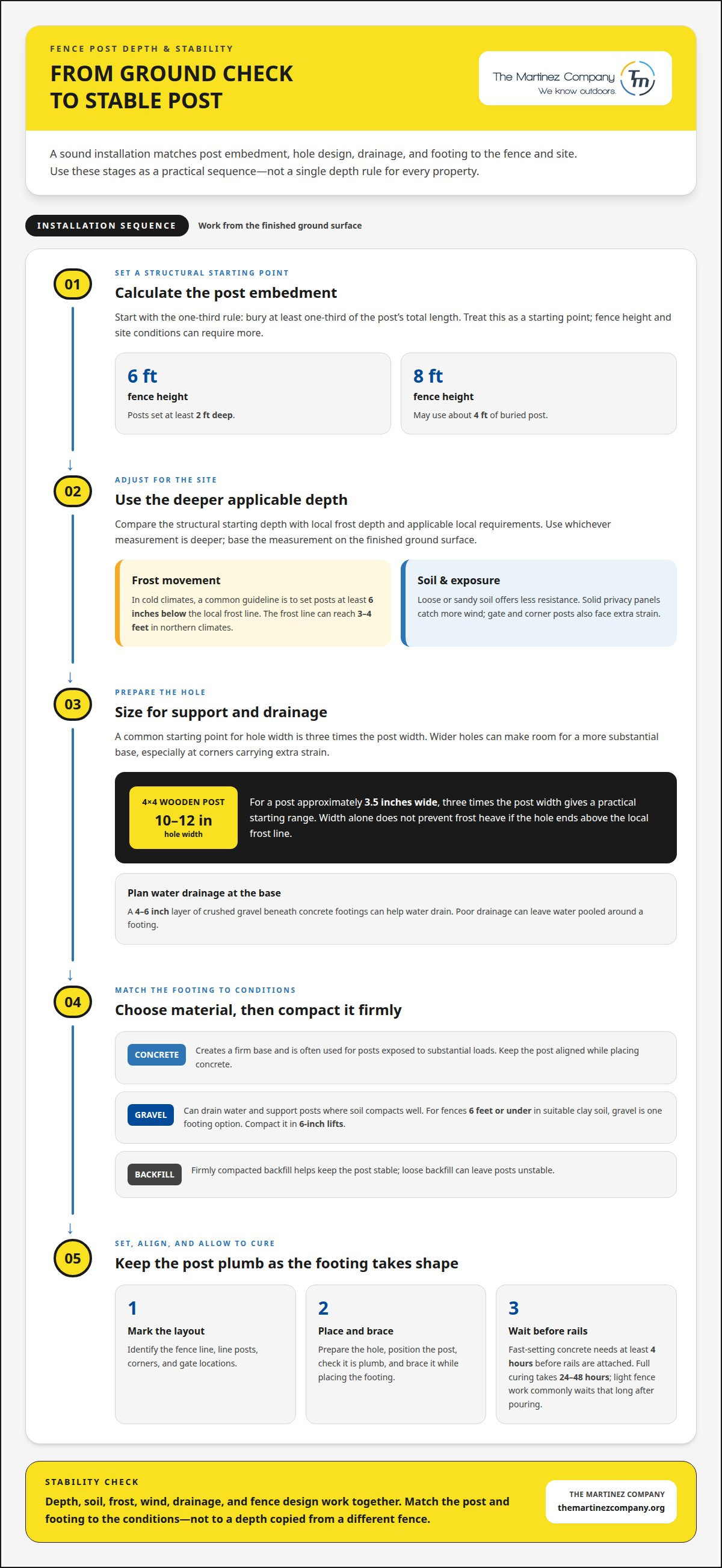
A fence’s strength begins below ground. A reliable fence post depth and stability guide starts with the one-third rule: bury at least one-third of the post’s total length, with a 6-foot fence needing posts set at least 2 feet deep. That’s a starting point, not a universal depth; soil, frost, wind exposure, and fence design can call for deeper posts.
It’s easy to focus on the visible panels, but the buried part of each post helps anchor the fence against movement and wind. Getting the depth right supports a secure fence that stays aligned over time.
This guide explains the one-third rule, how ground conditions affect post depth, and why hole width, drainage, and backfill matter. You’ll also learn what to consider for taller or heavier fences and how professional installation brings these decisions together, from layout to a stable, finished fence.
Table of Contents
What the Reddit Discussion Says About Fence Post Depth?
Depth recommendations depend on fence height, post length, and ground conditions. For a 4-foot fence, posts need at least 18 inches underground, with about 2 feet a typical buried depth. A 6-foot fence needs at least 2 feet of embedment. An 8-foot fence may use about 4 feet of buried post. These figures are starting points, not interchangeable rules for every fence system or site.
A common mistake is treating the one-third rule as the only calculation. It calls for burying at least one-third of the post’s total length, but frost depth or loose soil may require deeper installation. Another mistake is measuring from the wrong level: depth should be based on the finished ground surface, not a temporary pile of excavated soil. A shallow hole leaves less of the post anchored underground, making the fence easier to move.
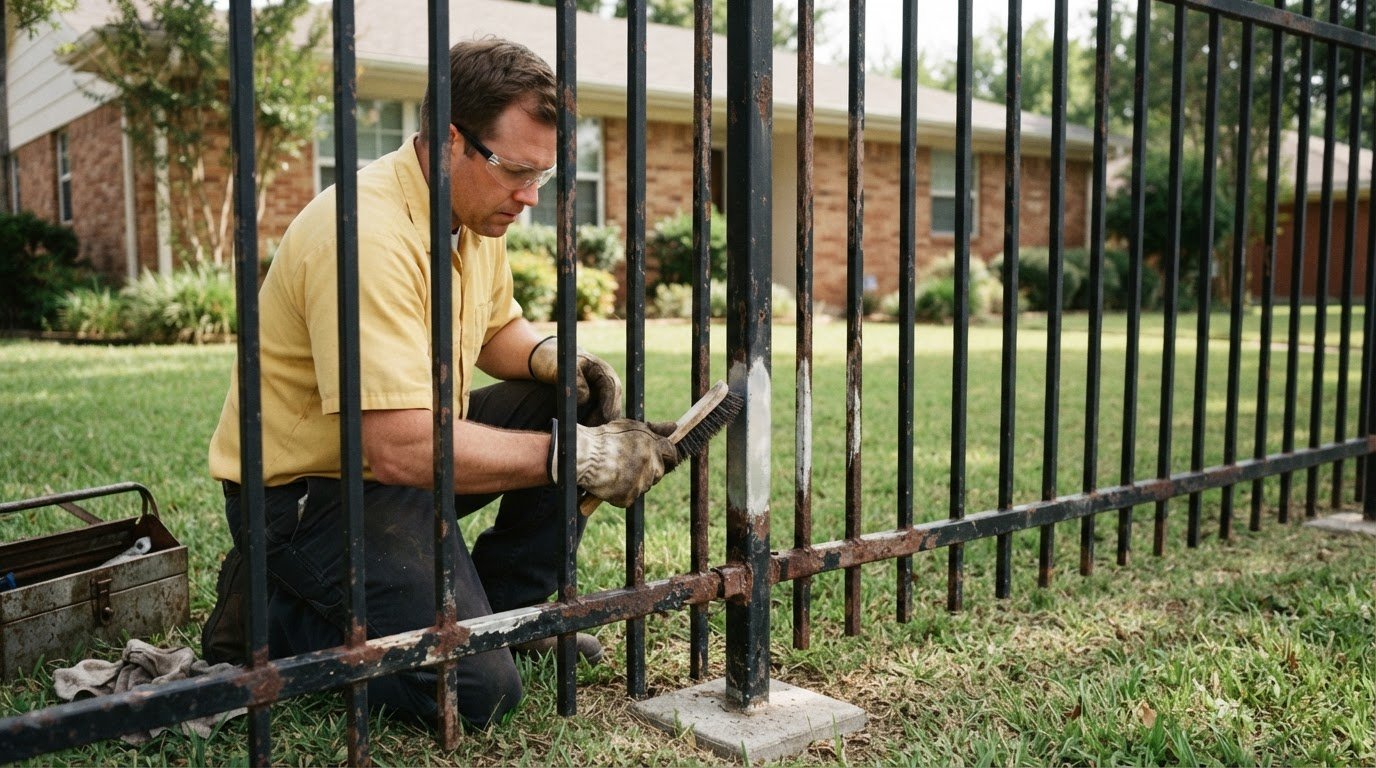
Post failure often starts when installation conditions are overlooked. Frost can shift posts that stop above the frost line. Sandy or loose soil offers less firm support, while strong wind puts extra pressure on broad privacy panels. Poor drainage can leave water around posts and increase deterioration. For underground metal posts, galvanized or PVC-coated finishes help prevent rust, while caps can reduce water entering from above.
Backfill and placement matter as much as depth. A post can lean if the surrounding material isn’t firmly compacted or if the hole is too narrow to provide a stable base. Chain-link fences have different structural demands from solid privacy fences, so don’t copy post spacing and depth from another fence type without considering those differences. A sound installation matches embedment to fence height, soil, frost line, and exposure rather than relying on one number.
How Wide Should a Fence Post Hole Be?
A common starting point is a hole three times the post’s width. For a 4×4 wooden post, approximately 3.5 inches wide, that means a 10-12-inch hole. Wider holes can provide room for a more substantial base, especially for corner posts carrying extra strain. Width alone, however, won’t prevent frost heave if the hole ends above the local frost line.
Depth must account for both structural needs and seasonal ground movement. For a 4-foot fence, a common starting depth is 24 inches, unless the local frost line extends deeper. The U.S. Environmental Protection Agency identifies frost-line depth below grade as one factor in determining proper burial depth. In northern climates, the frost line can reach 3-4 feet, so a short structural calculation may not be enough.
What building codes or local rules govern fence post depth? Local building requirements or an authoritative local source can provide the applicable frost-line depth. Compare it with the structural starting depth and use whichever measurement is deeper.
How do soil type and frost line affect fence post depth? Sandy or loose soil offers less resistance than compacted ground, so posts may need deeper or wider holes. Frost-line depth matters too: frozen ground can grip a post and shift it as the soil freezes and thaws.
How can you prevent fence posts from heaving in freeze-thaw conditions? Set posts below the local frost line; in cold climates, a common guideline is at least 6 inches below it. That placement helps reduce frost heave by locating the post beneath the zone of seasonal soil movement.
Wind and drainage also affect hole design. Solid panels catch more wind than open designs, transferring greater force to posts and their bases. Poor drainage can leave water pooled around the footing, and wet ground may call for drainage measures alongside secure post support. Gate and corner posts face extra strain from gates, turns, or tension, so their footing design should reflect those loads. Match depth and width to the ground, frost exposure, and fence layout.
Concrete, gravel, and compacted backfill
Professionals select footings to suit the soil, drainage, and fence loads. They lay out the posts, set each one plumb, and secure it with an appropriate footing.
Choosing a Footing Material
A footing is the material supporting a post underground, and its choice affects drainage and resistance to movement. Concrete creates a firm base, often used for posts exposed to substantial loads. Gravel or crushed stone can drain water and support posts where soil compacts well. For fences 6 feet or under in suitable clay soil, gravel footings are one option. Installers compact gravel in 6-inch lifts; loose backfill can leave posts unstable.
Professional Post Setting and Plumbing
Plumbing a post means aligning it vertically before its footing sets, so rails and panels meet cleanly. Professionals position the post, check its alignment, and brace it while placing concrete. To estimate concrete quantity, they calculate the hole’s volume from its width and depth, then account for the space taken up by the post. Hole dimensions and post size determine how much concrete is needed, including for a heavier gate post.
Drainage matters at the base. A 4-to-6-inch layer of crushed gravel can help water drain beneath concrete footings. The post must remain aligned while concrete is placed, so the base supports it without shifting.
Professional Fence Post Installation for Stability
Professionals start by marking the fence line and identifying line posts, corners, and gate locations. They prepare each hole to the planned depth, add drainage material where appropriate, and position the post. After checking that it is plumb, they place concrete or compacted backfill around it, keeping it aligned as the footing takes shape.
Concrete placement and curing affect the next installation stage. Fast-setting concrete needs at least 4 hours before rails are attached; full curing takes 24 to 48 hours. Light fence installation work commonly waits 24 to 48 hours after pouring. The footing material, drainage, and post alignment all work together to resist movement and keep the fence structure straight.
How post depth supports fence stability
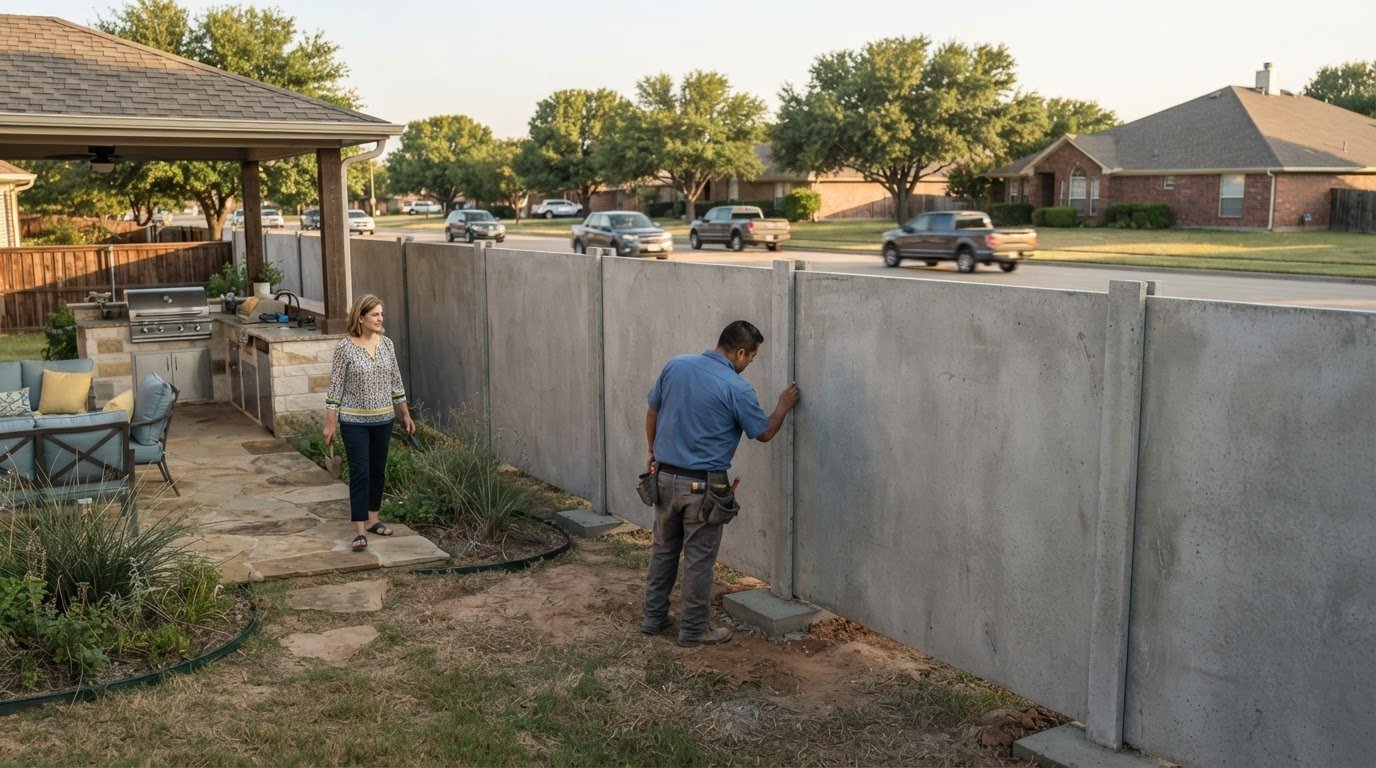
Buried depth helps each post resist forces acting above ground. Wind pushes panels sideways, while gates and fence turns concentrate strain on individual posts. A shallow setting leaves less of the post supported by the surrounding soil, making movement more likely as loads shift. Stability depends on matching embedment to fence height, material, soil, and exposure.
Consider a solid privacy fence in a high-wind area. Its broad panels catch more wind, so deeper posts and reinforced bases help counter lateral pressure. A common recommendation is to increase post depth by 25% for solid-panel fencing in high-wind zones. Sandy or loose ground needs attention too: guidance recommends increasing buried depth by 25-30%, because that soil offers less resistance than firm, compacted ground.
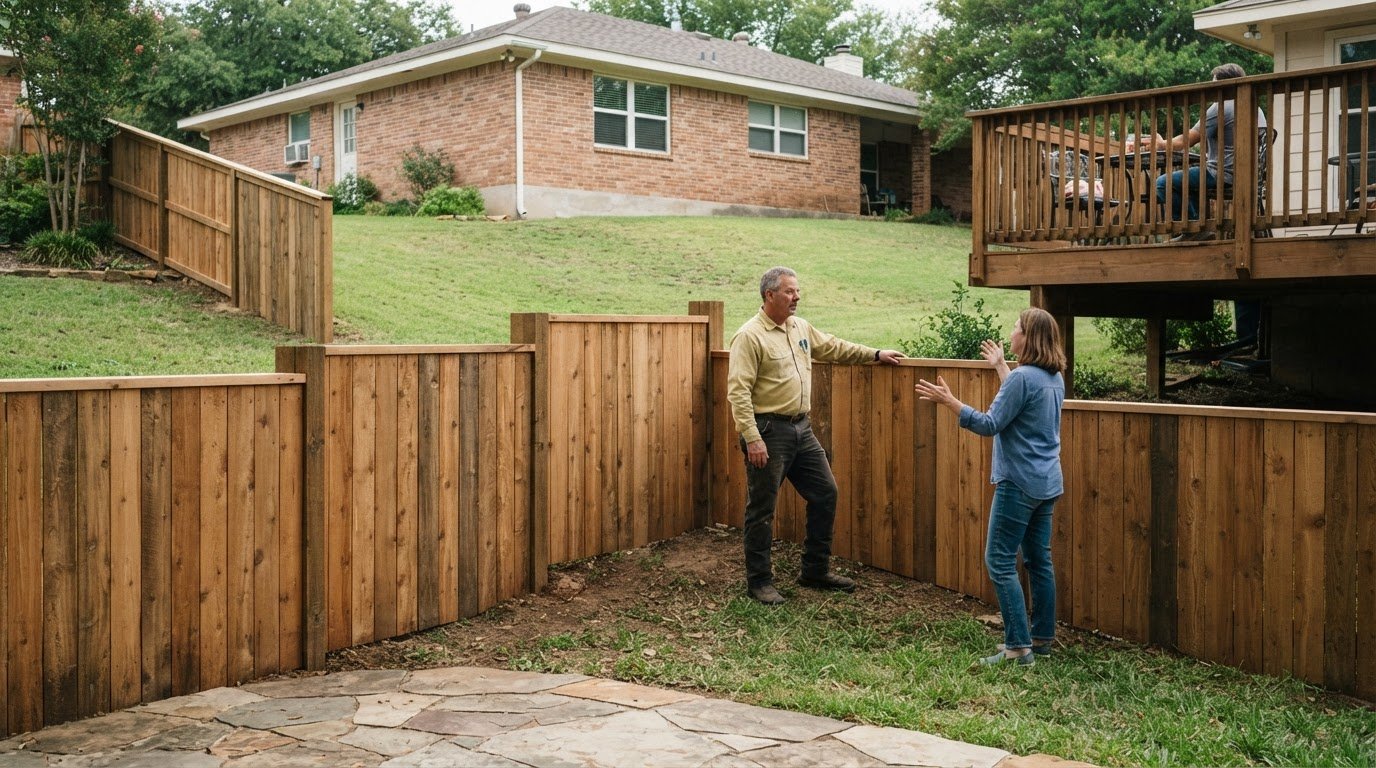
Loads aren’t uniform along a fence line. Corner posts carry tension from two directions, while gate posts resist repeated movement from opening and closing. Corner posts may be set 6 to 8 inches deeper than line posts; gate posts may need about 6 inches more depth. These added demands help explain why a single depth applied to every post can leave key points vulnerable.
Post spacing works with depth to keep fencing steady. For fence heights above 6 feet, 4×4 posts should be spaced 6 feet apart. Wider spacing can leave each post supporting a longer panel span, increasing the force transferred to its footing. A taller fence also exposes more surface to wind, so both spacing and embedment need to suit the design.
The practical takeaway: stability comes from a system, not depth alone. Deeper setting, firm compaction, suitable spacing, and stronger corner or gate supports address different sources of movement. A well-planned fence balances those factors before installation, rather than relying on extra depth to compensate for weak soil or unsupported spans. For a stable build matched to your site, plan a professional fence installation.
The Martinez Company: Fence Installation
The Martinez Company installs fences for residential and commercial projects. Turn to its team when you want post depth, footing choice, and layout considered as part of one coordinated build. Site conditions, fence height, and intended use all shape the decisions involved in planning a stable finished fence.
A fence can also fit into a larger residential or commercial contracting project or an outdoor living space. The aim is a finished fence planned for its setting, not posts treated as isolated parts. Contact The Martinez Company to discuss your fence project.
Move From Planning to a Finished Fence
Let the fence’s purpose shape the next decisions. A boundary fence, a private outdoor retreat, and an enclosure integrated into a larger property project each call for a design that fits its setting. Use this fence post depth and stability guide as a planning reference, then bring the intended layout, materials, and site conditions into the project discussion.
The Martinez Company handles residential and commercial contracting and outdoor living spaces, so fence installation can be part of a broader build. A coordinated plan can align the fence with how the property will be used and how its outdoor areas should function.
Share your project goals and take the next step with Contact The Martinez Company. A well-planned fence can help shape a more secure, considered space.
Frequently Asked Questions
The 1/3 Rule: How Deep Should a Fence Post Be?
The one-third rule means the buried portion should be at least one-third of the post’s total length. Measure from the post’s bottom end to its top, not just the section above ground. Then account for the planned ground level and any grade changes along the fence line. A fence post depth and stability guide can help organize these measurements before finalizing the post layout.
How Far Apart Should Fence Posts Be?
Set post spacing to suit the fence system and panel layout. Posts should meet panel ends and support rail connections, so panel dimensions influence their placement. Changes in grade, corners, and transitions between fence styles can also affect the layout. A professional plan coordinates these points before installation, helping avoid awkward panel cuts and unsupported rail ends.
How Deep Should Gate Posts Be Set?
Gate-post depth depends on the gate’s width and weight, its hinge arrangement, and the ground supporting the post. Unlike a fixed fence panel, a gate moves and transfers force through its hinges as it swings. The post must stay aligned with the latch and opening, so footing design should account for the gate hardware and expected use, not just fence height.
What Happens if You Don't Put a Post Below the Frost Line?
Seasonal ground movement can gradually disturb a post within the freezing zone. The first signs may show in how the fence works: a gate latch may stop lining up, a panel may look uneven, or a straight run may develop a visible dip. These signs indicate that the post and surrounding ground have shifted from their original alignment.
Why Add Gravel?
Gravel can provide a stable, permeable layer beneath a post footing and give water a route away from the base. Its usefulness depends on the surrounding soil and drainage design. Gravel alone won’t solve a site where water has nowhere to go. The material and its placement should complement the footing so the support stays consistent rather than shifting against loose surrounding fill.
How deep should fence posts be set for different fence heights?
Greater fence height generally calls for a longer post and more embedment, but height alone doesn’t determine the final depth. For a 7-foot fence using a 10-foot post, a depth calculation gives 40 inches. This fence post depth and stability guide should be applied alongside the fence’s material, exposure, and local ground conditions, since those factors can change the structural demand.
Comments