
Creating a Year-Round Outdoor Living Space That Stays Comfortable
A year-round outdoor room is designed for changing weather, not just sunny afternoons. Creating a year-round outdoor living space means combining shade and shelter, comfortable seating and dining areas, durable surfaces, and ways to stay warm when temperatures drop. A weather-ready outdoor kitchen can anchor the space, while a fire feature makes cool evenings more inviting.
It’s easy to plan around summer and leave the patio unused for the rest of the year. A better approach is to account for sun, wind, rain, and cooler days from the start, so the layout and materials contribute to comfort alongside added features. This guide explains how to arrange useful outdoor zones, choose materials that stand up to the elements, add practical warmth, and plan a kitchen for more than fair-weather cooking. The goal is a thoughtfully designed space that feels comfortable in every season, from the first decisions to the finished structure.
Table of Contents
1. How do you design outdoor living spaces for all seasons?
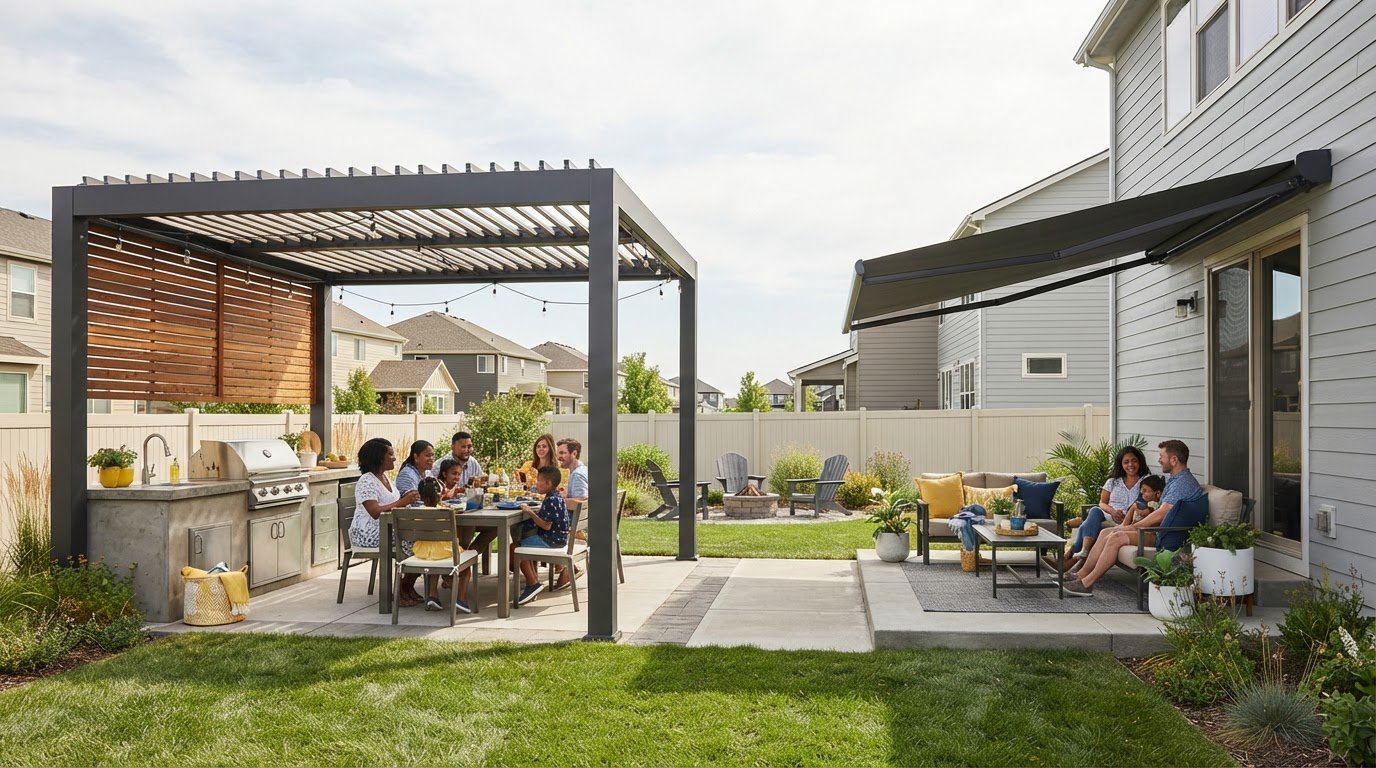
Start by dividing the backyard into clear zones for dining, relaxing, and gathering. Place the dining area near the home’s kitchen, then position seating where people can enjoy the sun without sitting directly in prevailing winds. A pergola or retractable awning can shade a summer table and offer shelter from light rain. A covered patio provides broader protection from sun, rain, and falling leaves. These choices help the space work beyond one season, rather than making it dependent on perfect weather.
Plan for passive comfort before adding powered features. Deciduous trees can shade seating in summer while letting winter sunlight through their bare branches. A trellis with climbing plants can soften a windbreak without closing off the backyard, and natural sunlight can make a sheltered patio more pleasant on cooler days. Arrange zones around these features: place dining where wind is less disruptive and keep a relaxation area near winter sun. Solar-powered path lights can illuminate routes without another powered fixture.
For all-season protection, a solid-roof covered patio provides shelter from changing weather. Clear panels or outdoor curtains can help shield an enclosed patio from wind and rain, while a pergola or retractable awning primarily offers shade and protection from light rain. Choose a structure based on the site’s exposure and the level of shelter you need.
Layer outdoor lighting for visibility and atmosphere as daylight fades. Start with ambient lighting, such as overhead string lights or lanterns, to give a dining or seating area a soft glow. Add task lighting at the grill or preparation counter, then use accent lighting to highlight a trellis, planting bed, or architectural detail. Dimmable LED fixtures let you adjust the mood, while path lights can illuminate steps and routes on dark winter evenings. Every light should serve a purpose, helping people see where they’re walking, cooking, and gathering.
For a simple lighting plan, map out routes and activities before choosing fixtures. Use solar-powered path lights along walkways, then hang string lights above a table or place lanterns near lounge seating. Keep cooking surfaces and steps clearly lit without directing glare into seating areas. This combination can make the backyard welcoming after sunset without relying on one bright fixture for every need.
Plan power and cooking areas with outdoor exposure in mind. Choose fixtures and electrical components designed for outdoor use, keep connections protected from moisture, and have electrical work installed by a qualified professional. Position kitchen task lighting over the preparation area, not just across the patio, and keep pathways clear between the kitchen, dining zone, and exit. These practical steps support comfort, visibility, and warmth throughout the season.
2. How can outdoor spaces stay comfortable in both hot and cold weather?
Start with your home’s climate and site, not a furniture catalog. Track where summer sun falls, where winter sunlight reaches, and which direction prevailing winds come from. Place dining and entertaining areas out of the strongest wind paths, then add shade where afternoon heat builds. A layout designed only for summer may be less comfortable during other seasons. Plan around changing exposure instead.
Choose furniture materials suited to moisture and temperature changes. Teak, aluminum, and recycled plastic are durable options for outdoor settings. Teak brings a warm, natural appearance; aluminum offers a lighter frame; recycled plastic can be practical for everyday seating. Before arranging pieces, consider how the material handles the elements and how easily it can be cleaned. Weatherproof cushion and pillow fabrics can help prevent fading and mold. Store cushions and throws when they’re not in use, and choose washable covers for easier upkeep.
Landscaping and privacy screens can reduce wind exposure without making a patio feel closed in. Use walls, screens, or changes in elevation to block prevailing winds, or plant climbers and shrubs along a trellis-style fence to create a natural windbreak. Deciduous trees can shade summer seating while letting winter sunlight through.
For cooler evenings, a fire pit or outdoor fireplace can provide warmth and a place to gather. Arrange comfortable seating around it so guests can face one another rather than line up against the house. A fire feature can extend entertaining into fall and early spring, while a patio heater provides more targeted warmth. Match the option to the space: a fire pit suits a central gathering area, while a heater can warm a specific dining or seating zone.
Make the arrangement work in more than one season. Keep a sunny seating spot for cooler days, and use adjustable shade or a covered area when summer sun or passing showers interrupt outdoor dining. Outdoor curtains or clear vinyl panels can add protection from wind and rain. Retractable screens offer another flexible option, blocking sun in summer and wind in winter. Choose a design that opens when the weather is mild, keeping the space connected to the yard.
Before settling on furniture, sketch where each piece will go in different weather. Check that dining chairs can move out of direct sun, wind protection doesn’t block access, and cushions have a dry place to be stored. A bench with built-in storage can keep throws close at hand. These details turn weather planning into everyday comfort, making the space ready for a summer meal or a cool-season gathering.
3. Durable, climate-appropriate materials
Choose materials to suit your climate and how each surface will be used. In hot, sunny conditions, light-colored paving can reflect heat and help keep a patio cooler. In wet or freeze-thaw conditions, select surfaces designed to withstand moisture and temperature changes without cracking, fading, or becoming slippery. Stone, concrete pavers, and porcelain can provide durable footing when selected appropriately. Match each material to its location, exposure, and daily use. When creating a year-round outdoor living space, consider how surfaces will perform in changing conditions, not just on installation day.
Natural materials bring texture and character to an outdoor living area. Timber decking, stone paving, and brickwork can define spaces, from a dining area to a quiet corner for evening coffee. Wood needs careful detailing and placement to limit moisture problems. Direct drainage away from wood elements, and consider how shade and sunlight affect the surface in summer. A well-planned transition between paving and decking can define the living area without interrupting the walking route.
Engineered materials can reduce upkeep compared with traditional wood. Maintaining an average traditional cedar or IPE deck takes 8-12 hours of labor annually, in addition to materials. Traditional cedar and IPE decks may need replacement in 15-20 years, even with perfect maintenance. Modern engineered outdoor materials have realistic lifespans of 25-30+ years. Composite decking or treated wood can also support longevity, but the right choice depends on exposure, maintenance preferences, and the finish you want.
Include the patio foundation in your materials plan. Proper grading and drainage help prevent puddles, runoff, and surface damage that can make outdoor areas harder to use between seasons. Notice where water collects after rain, then plan a clear route for runoff. Keep paths accessible in wet or icy conditions, and select paving with suitable traction. These decisions help protect the surface and maintain access to seating and cooking areas.
Screened porches, sunrooms, and covered patios differ in shelter, enclosure, and how closely they connect to the outdoors. A screened porch stays open while creating a barrier; a sunroom offers a more enclosed environment; a covered patio provides overhead shelter while remaining open-sided. Project costs depend on size, materials, enclosure, site preparation, and structural details. Request a quote to discuss the scope of your project.
Permit and building-code requirements for patio covers and enclosures depend on the project’s location and scope. Local rules can vary based on factors such as attachment to the home, structural design, enclosure, and added electrical work. Account for these details during project planning. For a lasting approach to creating a year-round outdoor living space, match the structure and surface choices to the site conditions and intended use.
4. Extending the entertaining season with fire
A fire feature can turn a chilly evening into a reason to gather outdoors. Fire pits and outdoor fireplaces provide warmth and a focal point, extending entertaining into fall and early spring. In milder climates, comfortable seating around a fire can support outdoor gatherings beyond summer. Choose a feature that suits the landscape and how people will use the area, rather than treating it as decoration without a clear purpose.
Start with how people will gather. A fire pit suits a circular arrangement where guests can face one another, while an outdoor fireplace can anchor seating that faces one direction. Leave practical routes between the seating area, home, and outdoor kitchen. Arrange chairs so guests can join a conversation without blocking the way to dining. A simple sketch can show how the fire feature, seating, and paths fit together before you finalize the patio layout.
Match the heating approach to the space. A fire pit creates a shared gathering point, while a patio heater provides targeted warmth for a particular seating or dining area. Overhead infrared heaters are another option for outdoor spaces intended for year-round use. Portable propane heaters offer flexibility when the layout changes. Each choice suits a different need: a central gathering point, warmth across a covered area, or heat that can move with the seating.
Think about how the fire feature connects with the rest of the backyard. Place it where seating can benefit from its warmth, with a clear route to the kitchen and dining area. A fire feature near the edge of a patio may leave open space for other activities, while a central location can make it the evening’s natural meeting point. Keep the surrounding landscape in view, and plan plants, paths, and seating as part of one deliberate layout.
Comfort depends on more than the flame. Wind can affect fire-pit seating and outdoor dining, so consider prevailing wind direction before choosing a location. Walls, screens, or a trellis-style fence with climbing plants can create a sheltered edge while keeping the space visually open. Place seating where guests can gather out of the wind, and maintain a practical route between the fire, home, and other backyard zones.
Make the feature an extension of the home’s living area, not an isolated destination. For example, set a few chairs near the fire for quiet winter evenings, while keeping a larger dining zone available for gatherings. This arrangement gives the landscape more than one purpose: a fire-centered spot for conversation, plus room for meals and movement. The right mix of fire feature, seating, and layout makes cool-season entertaining feel intentional.
5. Outdoor kitchens for year-round use
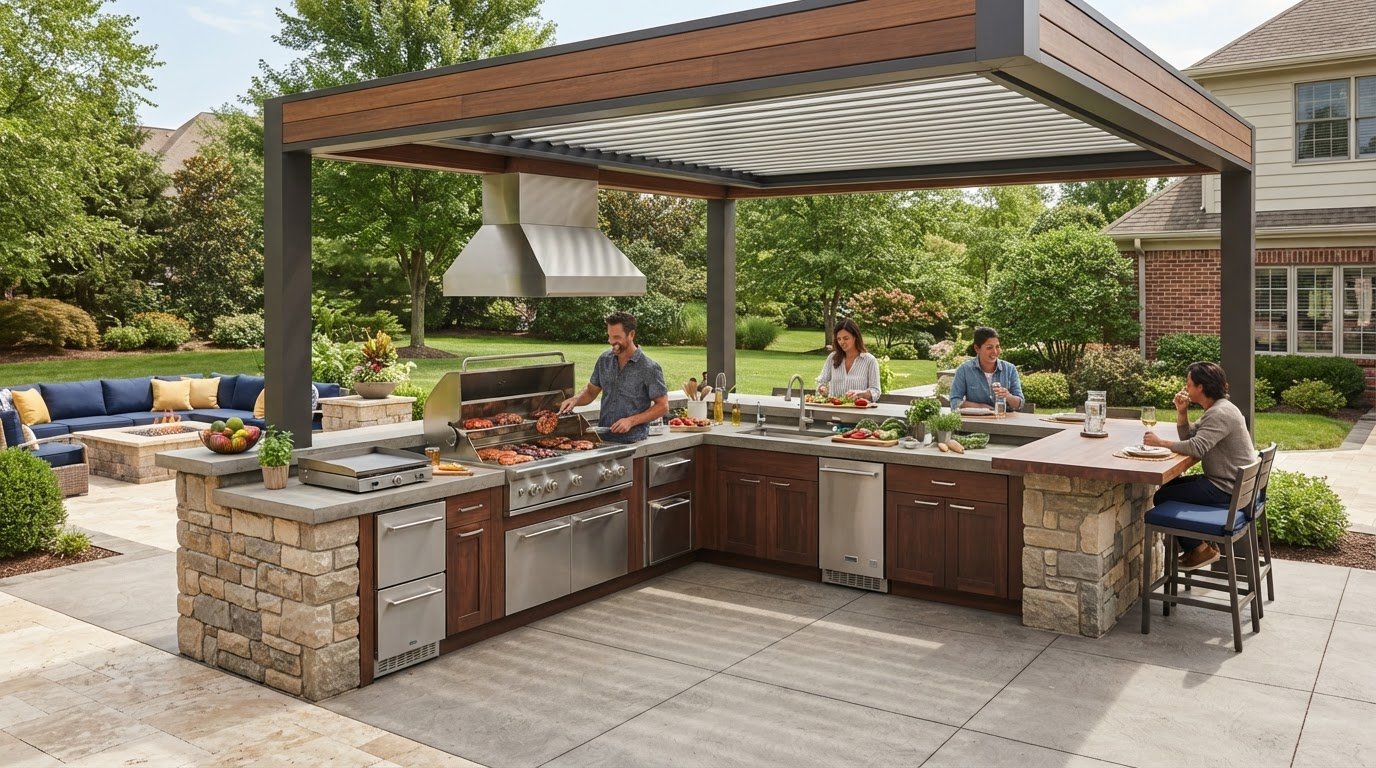
A year-round outdoor kitchen needs to work in changing temperatures, not just on summer weekends. Start with the meals you prepare and the people who gather around them. A grill, preparation counter, and nearby dining area create a practical sequence from cooking to serving. Keep the layout connected to the home, while leaving room for guests to move through the outdoor area without crowding the cook. When creating a year-round outdoor living space, let the kitchen anchor everyday meals and gatherings.
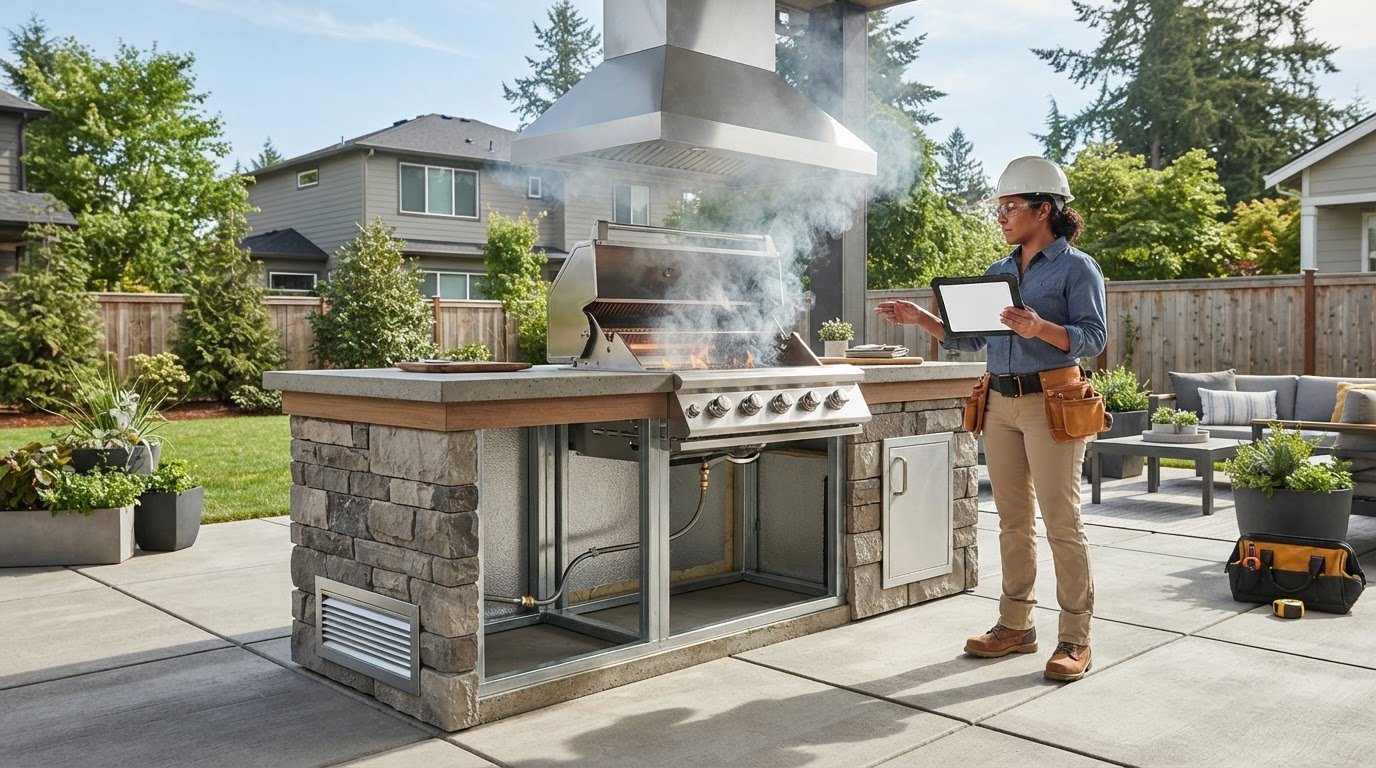
Choose materials that can handle regular exposure to weather. Weather-resistant cabinetry helps protect storage, while stone or stainless steel countertops are suitable outdoor kitchen options. Coordinate finishes across counters, cabinets, and nearby surfaces so the kitchen feels like part of the garden, not an afterthought. Consider how sun, rain, and temperature changes affect each surface before deciding where it belongs.
Make storage part of the design. Cabinets can keep serving pieces and cooking tools close at hand, reducing trips indoors during a meal. Place frequently used items near the preparation counter, and keep work surfaces clear for chopping and plating. For a compact outdoor area, prioritize essential tasks over extra features. A clear cooking zone beside dining space can turn an unused patio into a practical extension of the home.
Shelter and orientation affect how often the kitchen is comfortable to use. A covered area can shield the work surface and dining zone from sun and passing rain. Consider wind direction before locating the grill, and avoid placing the cook where gusts disrupt the seating area. Plan lighting for the preparation counter and paths so the kitchen remains functional as daylight fades. Keep the route between cooking and dining clear.
Plan how the kitchen will serve different seasons. In warm weather, guests may gather around the counter; in cooler conditions, a nearby fire feature can make dining more inviting. Keep cushions and other items that need protection in accessible storage. Choose surfaces based on their exposure and intended use, and make cleanup straightforward. These practical details help the space serve more than occasional summer entertaining.
Outdoor kitchens are increasingly treated as essential features: according to the National Kitchen and Bath Association, more than 75% of millennials consider them essential. That figure reflects the kitchen’s role as a gathering place, not simply an extra grill. Creating a year-round outdoor living space starts with a clear plan for cooking, dining, movement, and weather protection. Plan an outdoor kitchen for your living space around how you cook, dine, and entertain.
The Martinez Company: Commercial Contracting
The Martinez Company builds outdoor living projects through its Outdoor Living Spaces offering. If you’re ready to bring together a year-round kitchen, sheltered seating, durable surfaces, or a more defined backyard layout, its residential contracting work can carry the project from concept through construction. Commercial Contracting and Fence Installation can also support projects where outdoor areas connect with broader property needs.
Bring your priorities into the planning process: how you’ll use the space, what weather it needs to handle, and how cooking, dining, and gathering should flow. A clear plan shapes an outdoor area around real routines, not just one season. Contact The Martinez Company to discuss your outdoor living project.
Shape the Outdoor Space You’ll Use
The best next step is to turn your priorities into a clear project plan. Consider how you want the space to feel during an ordinary evening, how guests should move through it, and which features matter most to your household. These choices give the design a purpose before construction begins.
Creating a year-round outdoor living space is an opportunity to make more of the home you already have. The Martinez Company offers Outdoor Living Spaces, Residential Contracting, and Commercial Contracting to help bring outdoor projects from an initial vision to a finished structure. A focused conversation can help define the scope and the details that will make the space work for you.
Contact The Martinez Company about your outdoor project, and take the next step toward a backyard designed for everyday living. Build a space that feels like yours in every season.
Frequently Asked Questions
How can outdoor spaces stay comfortable in both hot and cold weather?
Combine flexible shade with seating that can adapt as conditions change. For example, keep a lightweight side table near lounge chairs so guests can move drinks or books into the shade. In cooler weather, add washable throws and cushions that can be stored indoors between uses. A sheltered corner can also make a pleasant reading spot when the rest of the yard feels exposed.
How do you design outdoor living spaces for all seasons?
Plan for how the space will change throughout the year. Sketch where you’ll sit on a bright summer afternoon, then consider whether those seats will feel inviting on a cool, overcast day. Leave room to move furniture and choose storage for items that shouldn’t stay outdoors. This flexible approach helps the space adapt to changing routines, from quiet morning coffee to an evening meal with guests.
Ready to Elevate Your Outdoor Living Experience?
Yes. Start by identifying what you want the space to make possible, such as family meals, outdoor cooking, or a quiet place to unwind. The Martinez Company offers Outdoor Living Spaces, along with Residential Contracting and Commercial Contracting. Share your priorities and the features you’re considering to start shaping a project around how you’ll use your property. A clear vision gives the design process a practical starting point.
What maintenance considerations matter for year-round outdoor spaces?
Build maintenance into how you use the space. After storms, clear leaves from corners where moisture can linger, and check exposed hardware for movement or wear. Clean outdoor kitchen work surfaces after cooking, and follow the care instructions for furniture finishes and fabrics. Before colder weather arrives, put away loose accessories and make sure storage areas remain dry and accessible.
What features make an outdoor living space usable year-round?
Prioritize features that support changing activities: protected cushion storage, movable seating, a covered dining area, and convenient access between cooking and gathering spaces. A bench with a storage compartment can keep everyday items close without adding clutter. Choose a layout with clear routes through the space, so people can move between the home, kitchen, and seating without rearranging furniture.
What outdoor heating options are most effective and energy efficient?
Choose heating based on the area you want to warm. An overhead infrared heater can direct warmth toward an occupied seating zone, while a portable propane heater can move as the arrangement changes. A fire pit or fireplace creates a shared gathering point. For more efficient use, focus heat where people sit rather than trying to warm an open yard, and switch the heater off when the area is empty.
How can you cool and ventilate an outdoor living space in summer?
Keep air moving and reduce direct sun on the areas people use most. A ceiling fan can circulate air beneath a covered patio, while a misting system can help cool the space on hot days. Open-sided shade structures let breezes pass through. Position seating so guests can move between sunny and shaded spots as the afternoon progresses, rather than relying on one fixed arrangement.
What maintenance and safety risks should homeowners consider for year-round outdoor spaces?
Pay attention to conditions that can make regular use less safe. Clear debris from paths, keep cords and stored items out of walking routes, and make sure steps are visible after dark. Check outdoor surfaces for loose or uneven areas, especially after heavy weather. Keep fire features and heaters away from furniture, plants, and busy routes, and follow the operating and care instructions supplied with each feature.
Comments