
Bamboo Fencing for Privacy: Benefits, Fire Risk, and Care
Bamboo fencing can create a private, natural-looking boundary, but the bamboo fencing pros and cons depend on how it’s installed and maintained. It offers a distinctive screen and plant-based appeal, while fire risk, upkeep, and bamboo’s growth habits deserve consideration. The right choice balances the look and privacy you want with the care your yard can support.
A dense fence can make an outdoor space feel more sheltered, so it’s understandable that bamboo appeals to homeowners seeking privacy without a conventional look. But appearance is only part of the decision. The fence needs to suit its setting and remain manageable over time.
This article explains how bamboo works as a privacy screen, what to consider about fire and maintenance, and how its environmental benefits compare with its drawbacks. You’ll also learn why bamboo’s growth habits matter and how thoughtful fence installation can turn a design idea into a practical boundary.
Table of Contents
Bamboo fire risk and maintenance
Bamboo fencing needs thoughtful placement and routine cleanup, especially where dry plant debris can collect. The product’s construction, exposure, and attachment method also affect maintenance.
Compared with wood, vinyl, and composite fencing, bamboo is a plant-based option with different care and fire considerations. Make the comparison based on the material, installation, appearance, and maintenance the site requires.
Fence height, setback, and permit rules depend on the property’s jurisdiction and location. Check local requirements before planning a fence, since rules can vary between communities and properties.
The installed cost of bamboo fencing depends on the project. Fence length, material, site preparation, and attachment method all affect the total, so request a quote for your specific plans.
Rain, humidity, wind, and pests affect bamboo differently depending on whether the fence uses living plants or manufactured panels. Fused bamboo does not attract bacteria, fungi, molds, or insects, but that alone doesn’t determine how a fence will perform in every exposure.
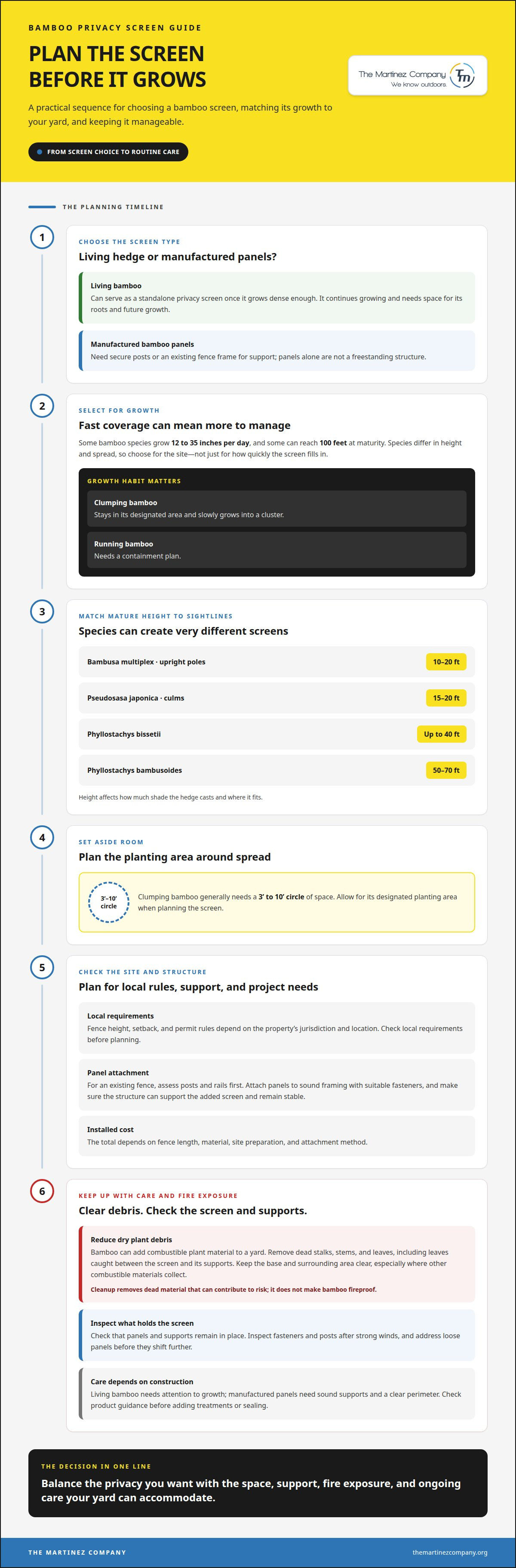
For an existing fence, first assess the posts and rails. Attach bamboo panels to sound framing with suitable fasteners, and make sure the underlying structure can support the added screen and remain stable.
Fire Risk
Bamboo fencing can add combustible plant material to a yard, so dry leaves and dead stalks matter. Clear that debris from the fence line to reduce potential fuel, particularly where vegetation or other combustible materials collect nearby.
Keep the base and surrounding area clear, and remove leaves caught between the screen and its supports. Cleanup won’t make bamboo fireproof, but it does remove dead material that can contribute to fire risk. Consider the fence’s placement as part of the yard’s overall exposure.
Maintenance Needs
Maintenance means clearing debris and checking that panels and supports remain in place. These simple steps help keep the screen neat and make visible problems easier to catch early.
Remove dead stalks, stems, and leaves during routine yard care. Care needs vary by product, so check the product guidance before adding treatments or sealing to your routine. Inspect fasteners and posts after strong winds, and address loose panels before they shift further.
Care depends on construction. A living bamboo screen needs attention to growth, while manufactured panels need sound supports and a clear perimeter. Regular observation helps keep the fence orderly without assuming every bamboo product needs the same upkeep.
Using bamboo as a hedge or privacy screen
Bamboo can create privacy as a living hedge or as panels fixed to a fence frame. The right approach depends on the screening you want, the space available, and bamboo’s growth habits.
Living bamboo can provide a dense screen, but species differ in height and spread. Some bamboo species grow 12 to 35 inches per day, and some can reach 100 feet at maturity. Fast growth can build coverage quickly, but it also makes species selection and containment central to the design.
Match mature height to the sightlines you want to block. Bambusa multiplex grows upright poles 10 to 20 feet tall, while Pseudosasa japonica culms grow 15 to 20 feet tall. Phyllostachys bissetii can reach up to 40 feet, and Phyllostachys bambusoides can grow 50 to 70 feet tall. These differences affect how much shade the hedge casts and where it fits.
Growth habit matters as much as height. Clumping bamboo stays in its designated area and slowly grows into a cluster, generally needing a 3’ to 10’ circle of space. Plan the planting area around that containment need.
Can bamboo fencing stand alone, or does it need a frame? A living bamboo hedge can serve as a standalone privacy screen once it grows dense enough. Manufactured bamboo panels need secure posts or an existing fence frame for support; panels alone aren’t a freestanding structure.
For a built screen, fence installation can provide the structure that holds bamboo panels in place. Select the hedge or panel approach around the privacy goal, available space, and the support the site requires.
Bamboo’s environmental benefits
Bamboo’s environmental appeal comes from its rapid growth and living root network, but those benefits depend on the form used. A planted hedge interacts with soil and continues growing; cut bamboo panels serve as fence material instead. Distinguish a living screen from a manufactured fence when weighing environmental advantages. Their roles in the yard are different.
Some bamboo varieties can reach full maturity in 90 days. Most varieties reach full maturity in a couple of years, while bamboo reaches maximum size within 5 to 15 years. These timelines describe different growth milestones, so they shouldn’t be treated as interchangeable. For a privacy hedge, the species and its growing conditions influence how quickly it fills its space.
Bamboo is said to produce 35% more oxygen than trees. That figure relates to growing bamboo, not to a fence made from harvested poles. A living hedge can contribute plant growth to the yard; a manufactured panel cannot keep producing oxygen after installation. The distinction matters when environmental benefits are part of the reason for choosing bamboo.
Roots offer another benefit. A network of bamboo roots helps hold soil in place, which can help prevent erosion and flooding. This advantage applies to bamboo planted in the ground, where roots can spread through the soil. It does not apply to fence panels mounted on posts, because cut material has no living root system.
Consider the full installation, not just the plant’s growth rate. A living hedge needs space for roots and ongoing growth, while panels rely on a supporting fence structure. If soil retention is a goal, planted bamboo is the relevant option. If you want a finished privacy boundary, assess the panel material and frame separately. Bamboo’s environmental benefits are most relevant when living plants can grow in a suitable location, rather than being assumed to apply to every fence.
Disadvantages of bamboo privacy screens
Bamboo can create privacy, but a living screen is not a fixed boundary. Its growth may extend beyond the intended planting area, while manufactured panels depend on their supporting structure. Decide which form suits the property before committing, since each has different space and maintenance demands.
Running bamboo can spread beyond its original planting space through underground rhizomes. This can be a practical issue beside garden beds, paths, or property lines, where new growth may appear outside the intended area. A containment plan helps manage spread but adds planning and installation work. Clumping bamboo grows differently, but still needs room to develop.
Height and density also vary by species. For example, Phyllostachys bambusoides can grow 50 to 70 feet tall, while Bambusa multiplex grows upright poles 10 to 20 feet tall. A screen that grows beyond the desired height may shade nearby areas or obscure views that should remain open. Account for mature size, not only the young plants’ appearance.
A living hedge also takes time to become a continuous visual screen. Gaps between young plants may leave sightlines open, and uneven growth can make coverage inconsistent. Plan spacing and layout around your privacy needs, then decide whether a gradual screen will work for you. Manufactured panels offer another option, but need a stable frame and careful fitting to avoid gaps between sections.
These trade-offs matter most where space is limited, boundaries are close, or consistent coverage is essential. Map the planting area, nearby paths, garden beds, and views before choosing bamboo. If a fixed panel is preferred, include sound posts and framing in the design. Plan your fence installation around the boundary, support, and privacy your property needs.
The Martinez Company
The Martinez Company helps turn outdoor privacy goals into a carefully planned, built space. If you’re weighing a bamboo hedge against a framed screen, consider the boundary, support, and upkeep the site requires.
Through residential and commercial contracting, The Martinez Company delivers projects shaped around the property and its intended use. Fence installation can provide the structure for a privacy screen, while outdoor living spaces bring the fence into a broader backyard design. Each decision connects the finished appearance with the space’s practical needs.
Consider professional help when you’re ready to move from comparing materials to planning the installation, especially if the fence needs to integrate with an existing outdoor project. Contact The Martinez Company to discuss your fencing plans.
Shape a Privacy Plan That Fits
Let the purpose of your boundary guide the next decision. Is your priority a natural screen that changes with the landscape, or a defined edge that holds its form? The answer can shape how you plan the space, connect the fence to surrounding features, and care for it over time.
Weighing bamboo fencing’s pros and cons is most useful when you picture the finished yard, not just the material. Consider the views you want to preserve, the areas that need separation, and how the screen should work with your outdoor living space. A clear plan turns these choices into a purposeful design.
For a project that’s ready to move from idea to construction, contact The Martinez Company. Take the next step with a plan built around the way you want to use your outdoor space.
Frequently Asked Questions
What are the main pros and cons of bamboo fencing?
The main bamboo fencing pros and cons depend on whether you choose a living hedge or manufactured panels. Bamboo offers a distinctive natural appearance and can provide visual privacy, but each option suits different needs. A hedge develops over time, while panels rely on a supporting structure. Consider whether you want coverage from panels or a planting that grows, then weigh upkeep, available space, and the finished look.
How long does bamboo fencing last outdoors?
A bamboo fence’s outdoor lifespan depends on the product, its exposure, and the condition of its supports. A panel in a sheltered spot may wear differently from one exposed to persistent moisture, direct sun, or strong wind. Installation matters too: secure attachment helps prevent movement, while loose sections can strain their connections. Inspect the panels and frame periodically, and address damage before it affects adjacent sections.
What privacy and noise reduction can bamboo fencing provide?
Bamboo fencing can block direct views when panels or planted growth form a dense, continuous barrier. Gaps between panels, sparse growth, or uneven edges can leave sightlines open, so assess the screen from the angles that matter in your yard. Bamboo may soften the sense of nearby activity, but it shouldn’t be treated as soundproofing. For noise reduction, the fence’s density, height, and placement all affect the result.
Is bamboo fencing sustainable, and are there concerns about chemicals or treatments?
As you weigh bamboo fencing pros and cons, distinguish a living hedge from harvested panels. Bamboo can be a renewable fencing material, but its sustainability depends on how it’s produced and maintained. Fused bamboo fencing doesn’t need regular treatments or sealing. That doesn’t establish that every bamboo product is chemical-free: finishes and manufacturing vary, so consider the specific material and finish.
Comments