
Aluminum vs Steel Commercial Fencing for Durability and Design
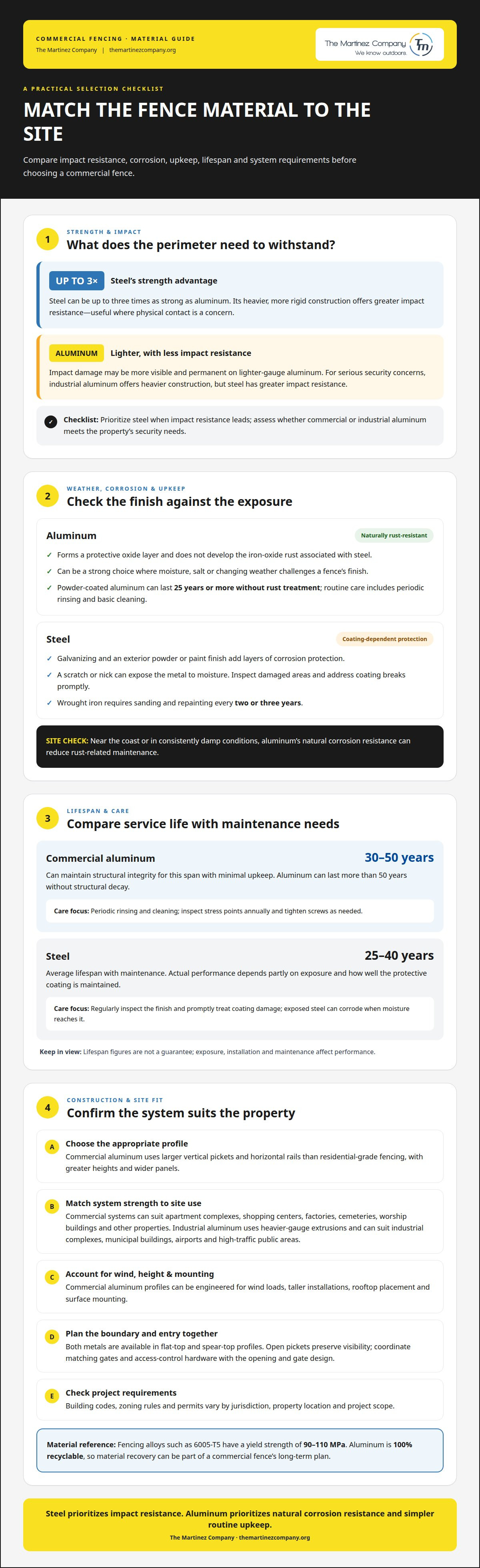
Steel can be up to three times as strong as aluminum, but strength is not the only measure of a commercial fence. In an aluminum vs. steel commercial fence comparison, steel offers greater impact resistance, while aluminum naturally resists rust and is lighter. The right choice depends on the site’s demands and the appearance you want.
Both materials can create a durable, finished perimeter. Compare strength, lifespan, maintenance, construction, and design to determine which better fits your property. Panel construction and options for following sloped ground also affect the result. Weigh these factors against your project’s priorities before settling on a material and fence design.
Table of Contents
Aluminum vs Steel Fencing: Which Option Delivers Better Durability and Design in 2026?
Steel can be up to three times as strong as aluminum, making it better suited to impact resistance. Aluminum naturally resists rust, while steel relies on an intact protective coating to limit corrosion.
Environmental impact depends on material use, maintenance, and end-of-life handling. Aluminum is 100% recyclable, so material recovery can be part of a commercial fence’s long-term plan.
Aluminum Corrosion Resistance
Aluminum forms a protective oxide layer naturally and doesn’t develop the iron-oxide rust associated with steel. That makes it a strong choice where moisture, salt, or changing weather could challenge a fence’s finish. A powder-coated aluminum fence can last 25 years or more without rust treatment. Homeowners and commercial property managers can maintain it with periodic rinsing and basic cleaning.
Strength and Impact Resistance
Steel is heavier, more rigid, and more impact-resistant than aluminum, which can matter along a commercial perimeter exposed to physical contact. Impact damage may be more visible and permanent on lighter-gauge aluminum. Steel’s strength comes with a maintenance consideration: a scratch or nick that breaks its coating can expose the metal to moisture and corrosion. Inspect and address damaged areas to help protect the fence’s condition.
Weather resistance depends on finish and upkeep, too. Galvanizing and an exterior powder or paint finish add layers of corrosion protection to steel, but exposed areas need attention. Wrought iron has a traditional appearance, yet requires sanding and repainting every two or three years. Near the coast or in consistently damp conditions, aluminum’s natural corrosion resistance can reduce rust-related maintenance.
Choose steel when impact resistance is the priority; choose aluminum when corrosion resistance and simpler upkeep matter more.
Commercial aluminum fence strength and applications
Commercial aluminum systems use larger vertical pickets and horizontal rails than residential-grade fences. These profiles suit properties that need a stronger boundary than a typical residential fence, such as coffee shops, apartment complexes, shopping centers, factories, cemeteries, and worship buildings. Commercial systems also offer greater heights and wider panels than residential-grade options. An aluminum vs. steel commercial fence comparison should weigh these applications against the site’s security needs.
For a material reference, fencing alloys such as 6005-T5 have a yield strength of 90-110 MPa. Industrial aluminum uses heavier-gauge extrusions and is stronger than commercial aluminum. It can suit industrial complexes, municipal buildings, airports, and high-traffic public areas. Schools and dog parks can use commercial or industrial systems, depending on the required resistance and site use.
Commercial aluminum profiles can be engineered for wind loads, taller installations, rooftop placement, and surface mounting. This flexibility helps accommodate different site conditions. Powder finishes provide a finished surface, while corrosion resistance may be an important consideration where moisture exposure affects material selection. For serious security concerns, industrial aluminum offers heavier construction, though steel has greater impact resistance.
Both metals are available in flat-top and spear-top profiles. Commercial aluminum also supports wider panels and greater heights than residential-grade fencing. Open pickets preserve visibility, while the selected configuration shapes the boundary’s appearance and enclosure.
Compatibility with gates and access controls depends on the opening, gate design, and hardware. Aluminum systems can include matching gates for larger openings and higher use. Coordinate access equipment with the gate configuration to create a functional entry.
Building codes, zoning rules, and permit requirements depend on the project’s jurisdiction. Local requirements vary according to the property’s location and project scope. Fence styles and security features also vary by system, including picket profiles and gate configurations.
Before installation, use an aluminum vs steel commercial fence comparison to connect site needs, access points, and fence design. Plan a commercial fence project around those priorities.
Fence lifespan
Commercial aluminum fencing can maintain structural integrity for 30 to 50 years with minimal upkeep. Steel fencing has an average lifespan of 25-40 years with maintenance. The difference depends partly on exposure and, for steel, how well its protective coating is maintained. Aluminum generally calls for periodic rinsing and cleaning, while steel needs regular finish inspections and prompt attention to damage.
Aluminum Fence Lifespan
Aluminum fencing can last more than 50 years without structural decay, and commercial aluminum systems can exceed twenty years of service. Powder-coated aluminum may last 25 years or more without rust treatment. That durability can support long-term value when limited routine upkeep is a priority. Periodic rinsing and basic cleaning help maintain its appearance. Inspect stress points annually and tighten screws as needed to keep components secure.
Steel Fence Lifespan
Steel fence lifespan varies with maintenance and installation, and ornamental steel fencing may remain serviceable for many years with minimal upkeep. Its protective coating is central to service life: exposed steel can corrode when moisture reaches it. Inspect the finish regularly, and treat paint scratches promptly with rust-inhibiting primer and touch-up paint. Address chips or emerging corrosion before damage spreads.
Plan maintenance around the fence material and its exposure. Aluminum benefits from periodic cleaning and annual checks of stress points. Steel requires regular attention to its coating, especially where scratches or chips appear. Installation quality, weather exposure, and care for the finish all affect durability. Consider these factors alongside expected upkeep, intended use, and long-term value.
Differences in aluminum and steel fence construction
Panel construction affects handling, slope fit, and the finished appearance. Aluminum panels weigh approximately 10-15 lbs per section, while steel panels can weigh 35-50 lbs. That difference influences shipping and installation, but panel design also determines how a fence meets the ground and frames a property.
Aluminum and steel are both available in flat-top and spear-top profiles, giving commercial perimeters distinct ornamental styles. Aluminum systems can also use vertical pickets, horizontal slats, open designs, or solid privacy configurations. Steel picket panels create an open boundary, while corrugated steel commonly consists of thin sheet panels attached to a frame or posts. Match the style to the site’s visibility and privacy needs.
Sloped ground highlights a key construction difference. Aluminum fencing often uses racking systems that let panels follow the grade without leaving gaps. Steel panels are typically stepped across hills, and steep inclines may leave open space underneath. On a sloped commercial property, that gap can affect the boundary’s continuity and appearance.
Panel weight matters during installation. Lighter aluminum sections are easier to ship and faster to install than steel sections. Steel’s heavier panels, in contrast, create a more substantial assembly. Thin, single-wall corrugated panels can be vulnerable to impacts in high-use environments, so distinguish them from ornamental steel picket systems when comparing construction.
Let the site layout guide your decision: identify slopes, privacy needs, and traffic exposure, then choose panel construction and profiles accordingly. For example, a sloped walkway may favor rackable aluminum, while a level perimeter can accommodate stepped steel panels. A protective finish and coordinated posts and gates complete the system. Construction details matter as much as material choice.
Plan a fence installation around your property’s grade, intended use, and preferred fence style.
The Martinez Company: Commercial Contracting
The Martinez Company provides commercial contracting and fence installation for businesses planning a new perimeter or updating a property. When you are ready to move from comparing aluminum and steel to planning a fence around your security, site layout, and appearance needs, the team can help bring the project together.
Start with practical priorities: the boundary’s intended use, the property’s grade, and the level of impact or corrosion resistance required. These factors guide material selection and the construction details that carry a design from concept to finished structure. The Martinez Company also provides residential contracting and fence installation, as well as outdoor living spaces.
Contact The Martinez Company to discuss your commercial fencing project and the outcome you want to build.
Turn Your Fence Decision Into a Buildable Plan
Use your aluminum vs. steel commercial fence comparison as a starting point, then turn your priorities into a clear project brief. Define what the boundary needs to do each day: guide entry, shape movement around the property, or establish a visible edge. Consider how the fence should relate to building entrances, vehicle paths, and the surrounding site. These decisions help align material and design choices.
A clear plan gives the installation direction. Describe the appearance you want, the areas that need access, and the site conditions that will shape panel placement. With those goals established, the project can move from initial ideas to a coordinated design and construction scope. The next step is to discuss the property and the outcome you want with The Martinez Company.
Contact The Martinez Company to discuss your project and take the next step toward a finished commercial fence.
Frequently Asked Questions
Does aluminum dent easily?
Aluminum can dent or bend under a concentrated impact, and lighter-gauge components may show damage more clearly. The result depends on the force and the fence profile. A cart striking a picket, for example, differs from sustained pressure against a panel. After an impact, inspect rails, pickets, and connections for bending or loosened parts, not just marks on the finish.
Which One Costs More to Maintain?
Steel generally needs more maintenance attention because its protective finish must be monitored, and coating damage may need treatment. Aluminum typically requires less corrosion-related upkeep, though it still benefits from cleaning and periodic inspection. For a commercial property, consider who will handle routine care and how accessible the fence is. Labor and exposure can affect the practical maintenance burden over time.
Cost and Value: Which is a Better Investment?
Neither material is automatically the better investment. Value depends on how the fence will be used and maintained. Project cost depends on design, material, gates, site conditions, and installation scope, and is determined after a quote request. Compare expected upkeep with the security and appearance the property needs. A lower initial outlay may not be the best fit if maintenance demands conflict with the site’s priorities.
Do steel fences require more footings?
Steel does not automatically require more footings than aluminum. Footing layout and dimensions depend on fence design, ground conditions, height, wind exposure, and gate locations. Steel’s heavier panels are one consideration, but they do not determine footing needs on their own. A project plan should coordinate posts and foundations with the fence layout, especially where gates or changes in grade affect the structure.
Do these fences require professional installation?
Professional installation is a strong choice for commercial fencing, particularly when a perimeter includes gates, sloped ground, or different surface conditions. Accurate layout helps align panels and posts, while appropriate installation details support the intended function and finished appearance. The Martinez Company installs fences for commercial and residential projects. For a commercial site, a coordinated installation plan can connect the fence design to the property’s use.
How does aluminum fencing compare with steel fencing for commercial properties?
Aluminum often suits commercial sites that value lower corrosion-related upkeep and a range of ornamental designs. Steel suits properties that prioritize greater impact resistance. Consider the demands of each boundary rather than choosing by appearance alone. A visible frontage, for example, may have different needs from a service-yard perimeter. The right selection brings material, access points, and daily site use together in one workable plan.
Comments